Ditapis dengan

Management malpractice : how to cure unhealthy management practices that disa…
Cynicism and distrust are rampant in today's business environment. Eighty percent of employees want nothing to do with their organizations, or the managers who run them. Great management principles, always the backbone of truly excellent companies, are now often used and manipulated by corporate leaders for their own gain. If left unchecked, these formerly great principles turn into malpract…
- Edisi
- -
- ISBN/ISSN
- 1-59337-350-3
- Deskripsi Fisik
- ix, 262 p. : concl., index ; 20 cm.
- Judul Seri
- -
- No. Panggil
- AA Hic
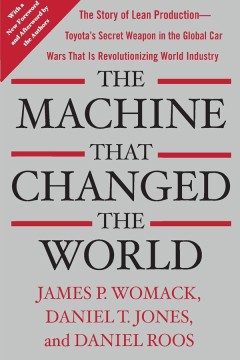
The machine that changed the world
When The Machine That Changed the World was first published in 1990, Toyota was half the size of General Motors. Today Toyota is passing GM as the world's largest auto maker and is the most consistently successful global enterprise of the past fifty years. This management classic was the first book to reveal Toyota's lean production system that is the basis for its enduring success. Now reis…
- Edisi
- -
- ISBN/ISSN
- 978-074329979-4
- Deskripsi Fisik
- vii, 336 p.: ill., tabs., index. ; 21 cm.
- Judul Seri
- -
- No. Panggil
- KHB 42 Wom

Organizational behavior
1. Introduction to the Field of Organizational BehaviorIndividual Behavior and Processes2. Individual Behavior, Personality, and Values3. Perceiving Ourselves and Others in Organizations4. Workplace Emotions, Attitudes, and Stress5. Foundations of Employee Motivation6. Applied Performance Practices7. Decisions Making and CreativityTeam Processes8. Team Dynamics9. Communicating in Teams and Orga…
- Edisi
- 6th Ed.
- ISBN/ISSN
- 9781121965515
- Deskripsi Fisik
- 518 p.: appendix.; 27 cm.
- Judul Seri
- -
- No. Panggil
- LQ/AAC 79 McS
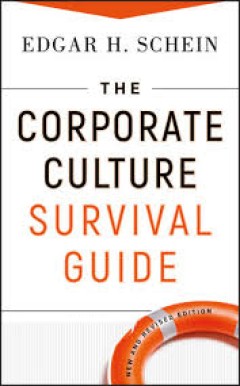
The Corporate culture survival guide
Culture. We blithely use the term for just about anything--a vibrant culture, a dominant culture, a corporate culture. But do we really know what we're saying, what culture really means? Or do we most often assume that the term is just a convenient way to group those with a common purpose or goal and a method for achieving it? Isn't a corporate culture, for example, just "the way we do things a…
- Edisi
- -
- ISBN/ISSN
- 9780470293713
- Deskripsi Fisik
- xv, 240 p.: tabs., index ; 23 cm.
- Judul Seri
- -
- No. Panggil
- LCB/LQ Sch

The Future of human resource management: 64 thought leaders explore the criti…
This book presents an international panel of expert contributors who offer their views on the state of HR and what to expect in the future. Topics covered include HR as a decision science, understanding and managing people, creating and adapting organizational culture, the effects of globalization, collaborative ventures, and investing in the next generation. Like its bestselling predecessor be…
- Edisi
- -
- ISBN/ISSN
- 0-471-67791-4
- Deskripsi Fisik
- xxiii, 424 p. : tabs., indexs; 24 cm
- Judul Seri
- -
- No. Panggil
- FA 78 Fut

Organizational behavior : improving performance and commitment in the workplace
Part 1 Introduction to Organizational BehaviorChapter 1 What Organizational Behavior?Chapter 2 Job PerformanceChapter 3 Organizational CommitmentPart 2 Individual MechanismsChapter 4 Job SatisfactionChapter 5 StressChapter 6 MotivationChapter 7 Trust, Justice, EthicsChapter 8 Learning and Decision MakingPart 3 Individual CharacteristicsChapter 9 Personality and Cultural ValuesChapter 10 Ability…
- Edisi
- 5th ed.
- ISBN/ISSN
- 978-1-259-25554-0
- Deskripsi Fisik
- xxii, 585 p. : figs., tabs., index. ; 27 cm.
- Judul Seri
- -
- No. Panggil
- LQ/AAC 79 Col
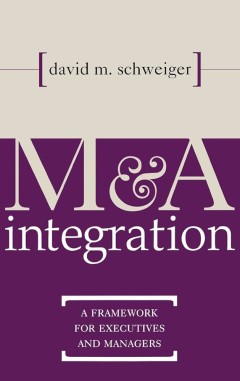
M & A Integration : a framework for executives and managers
TABLE OF CONTENTS Preface Acknowledgments Ch. 1 The Promising World of Mergers and Acquisitions Ch. 2 Strategic and Financial Objectives: The Drivers of Integration Ch. 3 Laying the Groundwork: Managing the Transaction Stage Ch. 4 Assessing Key Target People Ch. 5 Preparing Stakeholder Communications and Value Preservation Ch. 6 Preparing for Integration: Managing the Transition Sta…
- Edisi
- -
- ISBN/ISSN
- 0-07-138303-4
- Deskripsi Fisik
- xv, 287 p. : figs., endnotes, index ; 24 cm.
- Judul Seri
- -
- No. Panggil
- EGC Sch

Advanced brand management : from vision to valuation
Advanced Brand Management: From Vision to Valuation has been specifically written for anyone who needs to know how to manage the most valuable assets in the business world - brands. Paul Temporal, one of the world’s leading branding experts, presents a guide on developing and managing sophisticated stratEgies that will ensure lasting brand value. Dr Temporal gives answers to the many questio…
- Edisi
- -
- ISBN/ISSN
- 0-471-47925-X
- Deskripsi Fisik
- xv, 296 p. : case studies, index ; 24 cm.
- Judul Seri
- -
- No. Panggil
- BH 79

Managerial leadership
Effective management in today's competitive business environment requires solid leadership skillsÂÂskills for which companies often don't provide adequate training. This bookhat void, providing a four-tiered approach that helps professionals from all walks of life develop both strong management and leadership skills. Top leadership models and frameworks, tools for assessing leadership str…
- Edisi
- -
- ISBN/ISSN
- 0-07-137523-6
- Deskripsi Fisik
- xiii, 223 p. : tabs., figs., index ; 24 cm.
- Judul Seri
- The McGraw-Hill Executive MBA Series
- No. Panggil
- AFB/AA
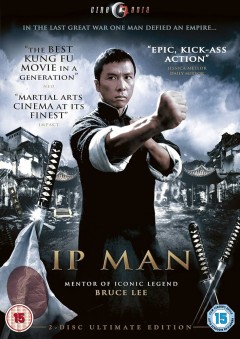
IP Man
Wing Chun is characterised by close body combat, requiring practitioners to show speed & power. Wing Chun originated in the 1920s in China. In this bio-pic, IP Man, one of the earliest Wing Chun martial arts exponents credited to have propagated its popularity, is portrayed as the best of the best in 1930s Fo Shan, China. The bustling city has its own Martial Arts Street where countless martial…
- Edisi
- -
- ISBN/ISSN
- -
- Deskripsi Fisik
- DVD, 106 min, Sub Ind.
- Judul Seri
- -
- No. Panggil
- NONE
 Manajemen Keuangan
 Human Resource Management
 Marketing Management
 Operations Management
 Strategic Management