Ditapis dengan

The Theory of corporate finance
The past twenty years have seen great theoretical and empirical advances in the field of corporate finance. Whereas once the subject addressed mainly the financing of corporations--equity, debt, and valuation--today it also embraces crucial issues of governance, liquidity, risk management, relationships between banks and corporations, and the macroeconomic impact of corporations. However, this …
- Edisi
- -
- ISBN/ISSN
- 978-0691125565
- Deskripsi Fisik
- xii, 644 p.: figs., tabs., index ; 26 cm.
- Judul Seri
- -
- No. Panggil
- EE Tir
Corporate finance : a practical approach
In today's competitive business environment, corporate managers must find innovative ways to promote rapid and sustainable growth. As part of the CFA Institute Investment Series, Corporate Finance has been designed to help you develop the skills to achieve this goal. The distinguished team of Michelle R. Clayman, CFA, Martin S. Fridson, CFA, and George H. Troughton, CFA—together with a num…
- Edisi
- -
- ISBN/ISSN
- 978-0470197684
- Deskripsi Fisik
- xxi, 451 p.: examples, exhibits, index ; 26 cm.
- Judul Seri
- -
- No. Panggil
- EF Cla
Modern financial management
corporate finance as the working of a small number of integrated and powerful intuitions, rather than a collection of unrelated topics. They develop the central concepts of modern finance: arbitrage, net present value, efficient markets, agency theory, options, and the trade-off between risk and return, and use them to explain corporate finance with a balance of theory and application. The well…
- Edisi
- 8th ed.
- ISBN/ISSN
- 9780071267755
- Deskripsi Fisik
- xvi, 924 p. : ill., tabs., index ; 25 cm.
- Judul Seri
- -
- No. Panggil
- EE Mod
Finance for manager
This is your guide and mentor to doing business effectively. Calculating and assessing the overall financial health of the business is an important part of any managerial position. From reading and deciphering financial statements, to understanding net present value, to calculating return on investment, this book provides the fundamentals of financial literacy. Easy to use and non-technical, th…
- Edisi
- -
- ISBN/ISSN
- 1-57851-876-8
- Deskripsi Fisik
- xii, figs., tabs., index ; 24 cm.
- Judul Seri
- Harvard Business Essentials
- No. Panggil
- EE Pin

Financial analysis
Corporations rely on their controllers and financial managers to provide a wide array of accounting functions, from processing accounts payable and receivable transactions to closing the books in a timely manner. Accomplishing these activities are the foundation of a successful career. However, in order to be truly notable and recognized as an innovative thinker in an organization, a controller…
- Edisi
- 2nd Ed.
- ISBN/ISSN
- 978-0470055182
- Deskripsi Fisik
- xii, 399 p.: exhibits, index ; 24 cm.
- Judul Seri
- -
- No. Panggil
- EE Bra

Bank dan Lembaga Keuangan
- Edisi
- -
- ISBN/ISSN
- 9786023183425
- Deskripsi Fisik
- x, 212 p. ; 24 cm.
- Judul Seri
- -
- No. Panggil
- ECB Abd
- Edisi
- -
- ISBN/ISSN
- 9786023183425
- Deskripsi Fisik
- x, 212 p. ; 24 cm.
- Judul Seri
- -
- No. Panggil
- ECB Abd
Entrepreneurial small business
Entrepreneurial Small Business (ESB) provides students with a clear vision of small business as it really is today. It focuses on the distinctive nature of small businesses that students might actually start versus high growth firms. The goal of the companies described in this textbook is personal independence with financial security; not market dominance with extreme wealth. Traditional belief…
- Edisi
- 3rd ed.
- ISBN/ISSN
- 0071220941
- Deskripsi Fisik
- xxxiii, 654 p.: figs., tabs., gloss., End notes.,
- Judul Seri
- -
- No. Panggil
- AZH/ABJ 79
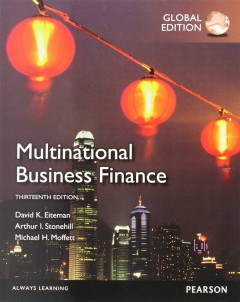
Multinational business finance
- Edisi
- 13th ed.
- ISBN/ISSN
- 978-0-273-76553-0
- Deskripsi Fisik
- 656 p.: index.; 25 cm.
- Judul Seri
- -
- No. Panggil
- EBJ/AZB Eit
- Edisi
- 13th ed.
- ISBN/ISSN
- 978-0-273-76553-0
- Deskripsi Fisik
- 656 p.: index.; 25 cm.
- Judul Seri
- -
- No. Panggil
- EBJ/AZB Eit
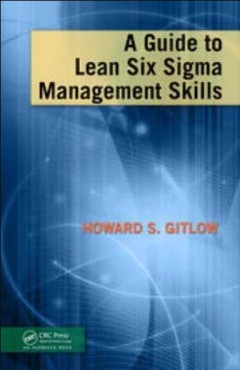
A Guide to lean six sigma management skills
In summary, the purpose of Six Sigma management is to 'promote joy in work' for all employees so that they have the energy to participate in the improvement and innovation projects identified from the organizational dashboard! - Howard S Gitlow. Authored by Dr, Howard Gitlow, one of the most respected Six Sigma Master Black Belts, this well-organized volume demonstrates the implementation of qu…
- Edisi
- -
- ISBN/ISSN
- 978-1-4200-8416-0
- Deskripsi Fisik
- xv, 150p. : ill., index. ; 24 cm.
- Judul Seri
- -
- No. Panggil
- CEQ/FBC 363 Git

Best practices in lean six sigma process improvement : a deeper look
Praise for Best Practices in Lean Six Sigma Process Improvement "Dr. Schonberger reveals why successful companies lose their way on their continuous improvement journey and the magic formula for achieving rapid continuous improvement. This is a must-read for those who must develop or broaden their competitive advantage." David L. Schlotterbeck, CEO of Clinical and Medical Products, Cardin…
- Edisi
- -
- ISBN/ISSN
- 978-0-470-16886-8
- Deskripsi Fisik
- xiii, 290p. : ill., index. ; 23 cm.
- Judul Seri
- -
- No. Panggil
- CA/CEQ Sch
 Manajemen Keuangan
 Human Resource Management
 Marketing Management
 Operations Management
 Strategic Management